Fresh picks, close at hand.
Try leaf lettuce, spinach or compact kale. Give each plant the spacing recommended on its seed packet or nursery label.
 Contact Us
Technical
Contact Us
Technical
Planning, assembly and product information for the modular garden system.
Each kit contains the brackets, Canadian cedar planks and specified wood screws needed for that layout. Soil, plants and tools are not included.
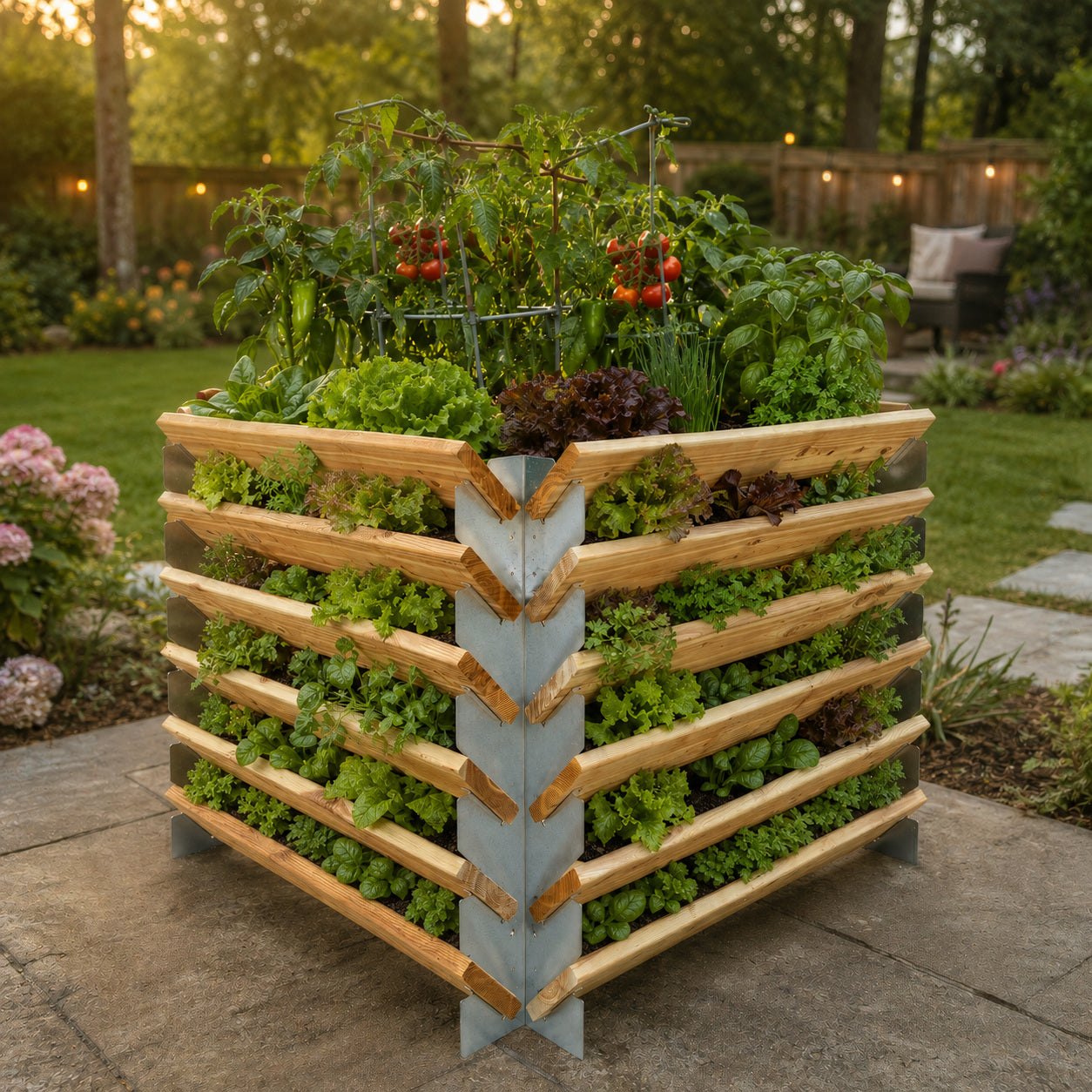
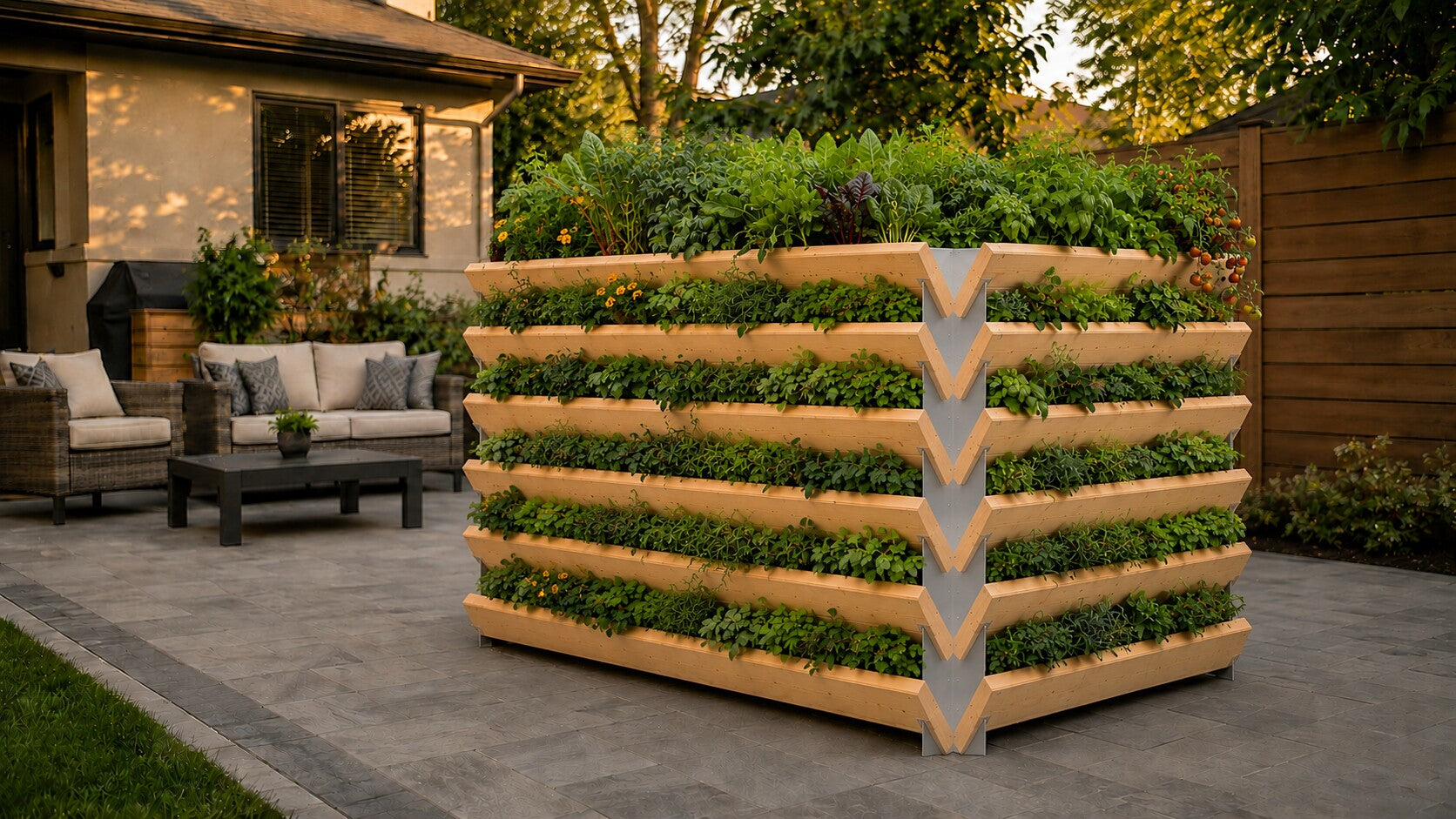
The full bracket system stands approximately 32 inches tall and seats six standard 5/4 × 6 inch cedar planks in a stacked planting configuration.
Square and rectangular gardens are freestanding. Double-sided kits also work as freestanding dividers with planting rows on both sides.
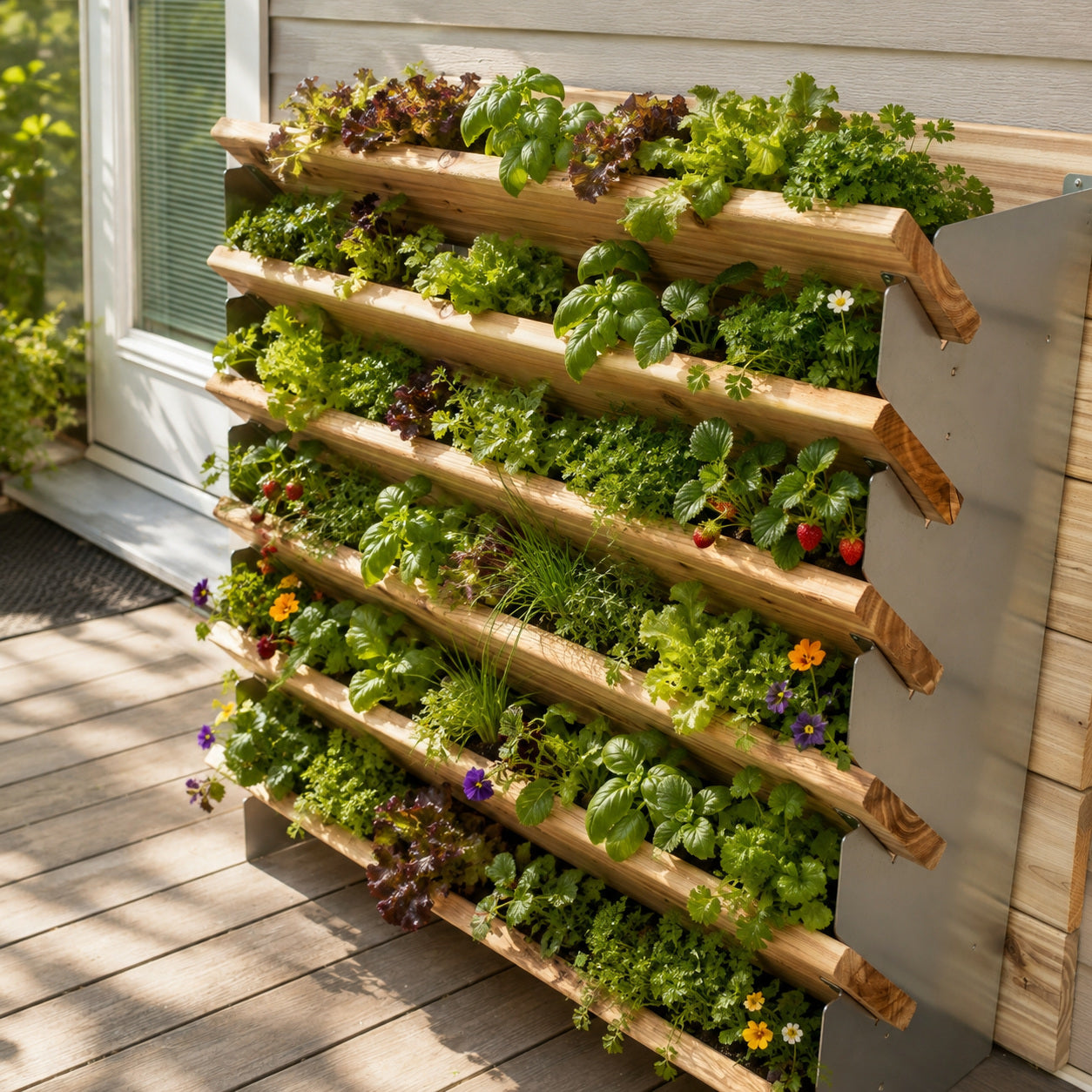
Use a single-sided kit against a suitable solid wall, fence or balcony structure. Its back is flat.
Yes. Joiner and centre-support brackets support longer runs. Follow the applicable assembly guide for the layout.
Cedar is naturally rot resistant, durable and well suited to outdoor garden use. Avoid treated wood where chemicals could leach into soil.
Cedar can easily last 7 years, and planks can be replaced as required. Our brackets are made from galvanized steel, which can last 40–60 years.
Herbs, leafy greens, flowers and vegetables can all be part of your garden. Match each plant to the available root space, sunlight and mature size. Use the planting guide below to plan your layout.
Plan around your garden’s sunlight, available root space and the mature size of each plant. These ideas are a starting point for choosing varieties that suit your space.
Try leaf lettuce, spinach or compact kale. Give each plant the spacing recommended on its seed packet or nursery label.
Basil, parsley and chives are useful container-garden choices. Choose positions with enough sunlight and room for their roots.
Compact tomatoes and peppers need more root space. Use the deeper central planting area of a square or rectangular garden where the variety’s soil-volume needs can be met, and provide support as needed.
Allow light to reach the lower planting rows, avoid crowding and check soil moisture regularly. Container plantings can dry out quickly. Match your planting date to local frost conditions and follow the plant label for light, spacing and care.
Not sure whether a plant suits your layout? Ask our team →
Tell us what you are working on and where you need help.
Contact Us